


How Far Can a BMW Electric Car Go? 2026 Range by Model (i4, i5, iX, i7)
The driving range of an electric vehicle is one of the biggest questions for anyone moving from gas to electric. The good news for 2026 is that BMW’s electric lineup covers a wide span of range, body styles, and price points — from the sporty i4 Gran Coupe to the flagship i7 sedan and the redesigned iX SUV. Here’s how far each 2026 BMW EV can go, and why details like wheel size matter more than most shoppers expect.
2026 BMW EV Range at a Glance
Here is how the current all-electric BMW lineup compares by its longest-range 2026 trim. Range depends on the trim, wheel and tire package, weather, and how you drive, so treat these EPA-estimated figures as a comparison tool rather than a guarantee. Each model links to its current inventory if you’d like to see what’s on the lot.
| Model | Longest-Range 2026 Trim | EPA-Estimated Range | Explore |
|---|---|---|---|
| BMW i4 (Gran Coupe) | eDrive40 | 307–333 miles | View i4 inventory |
| BMW i5 (Sedan) | eDrive40 | 278–310 miles | View i5 inventory |
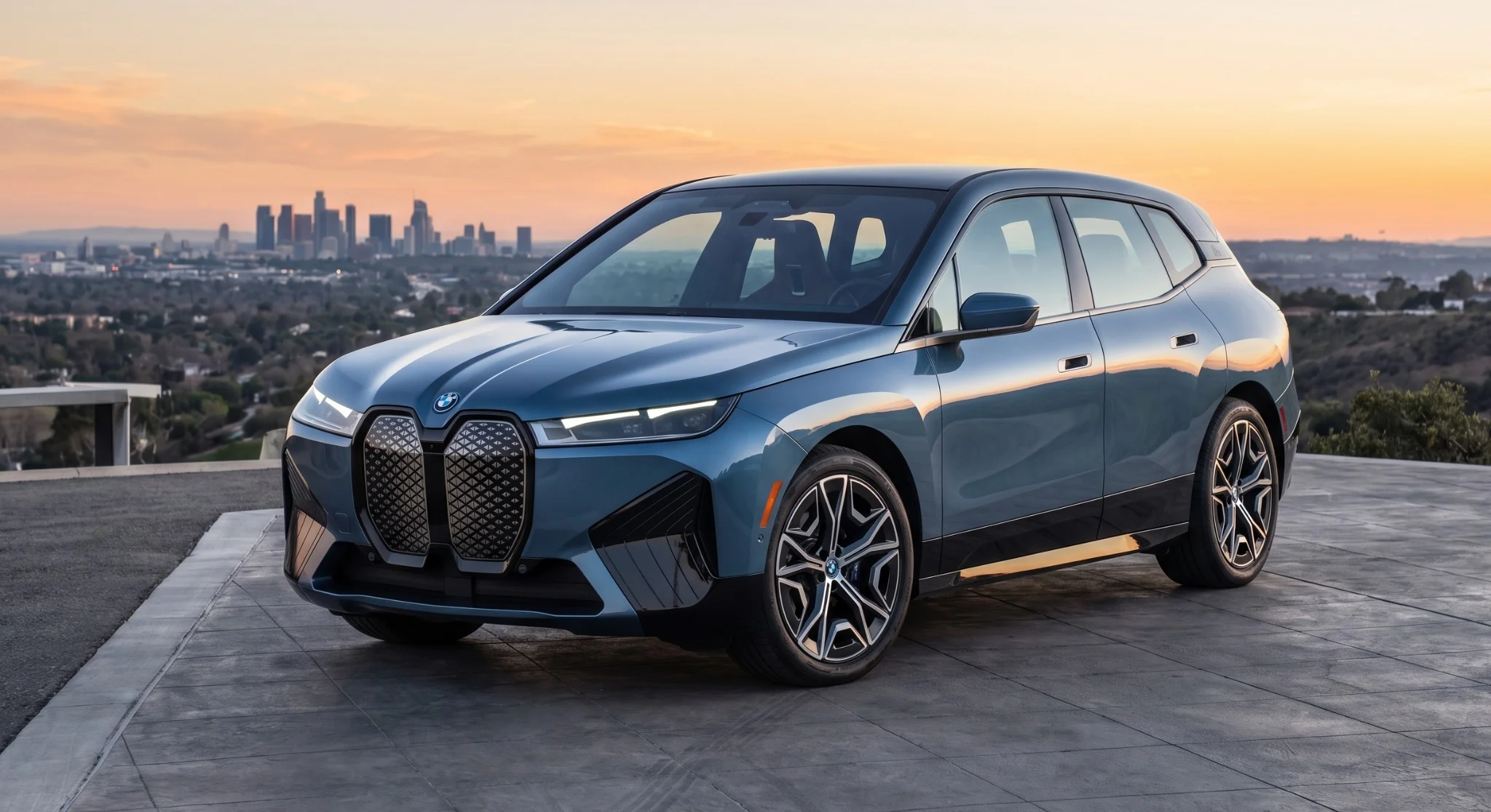
| BMW iX (SUV) | xDrive60 | 318–364 miles | View iX inventory |
| BMW i7 (Sedan) | eDrive50 | 301–314 miles | View i7 inventory |
EPA-estimated fuel economy figures are for comparison purposes only. Your actual mileage will vary depending on driving conditions, how you drive and maintain your vehicle, battery age/condition, and other factors.
BMW i4 Range and How Wheel Size Affects It
For 2026, the rear-wheel-drive BMW i4 eDrive40 carries an EPA-estimated range of 307 to 333 miles, with the top figure available on the standard 18-inch wheels. Thanks to updated silicon-carbide power electronics, the 2026 eDrive40 now stays above 300 miles whether it’s fitted with 18- or 19-inch wheels. The all-wheel-drive xDrive40 is EPA-estimated at 268 to 287 miles, and the performance M60 (renamed from the previous M50) is EPA-estimated at 232 to 278 miles depending on wheel choice.
That spread is the practical takeaway: larger wheels look great but trade away range through added rolling resistance and aerodynamic drag. If maximum range is your priority, the smaller wheel package is the one to choose.
BMW i4 Battery and Charging
The i4 uses a high-voltage lithium-ion battery with about 83.9 kWh of total capacity and 81.2 kWh usable. It accepts DC fast charging at up to 200 kW, and charging is quickest in the 10% to 80% window at a high-power public station. For daily use, the standard 11-kW onboard charger handles Level 2 AC charging at home, replenishing the battery overnight.
BMW i5 Range: The Electric 5 Series
The i5 is BMW’s all-electric 5 Series — a midsize luxury sedan that sits above the i4 in size and interior room. For 2026, the rear-wheel-drive i5 eDrive40 is EPA-estimated at 278 to 310 miles, and the all-wheel-drive xDrive40 at 259 to 278 miles. The performance M60 rounds out the lineup with dual motors; as the quickest and heaviest i5, its range comes in below the other two trims. As with every BMW EV, wheel and tire choice moves these figures up or down, so the smaller wheel package returns the most range.
BMW iX Range: Redesigned for 2026
The BMW iX is fully redesigned for 2026 and now comes in three variants. The new entry xDrive45 is EPA-estimated at 290 to 312 miles, the xDrive60 lands at an EPA-estimated 318 to 364 miles — the longest range in the current BMW EV lineup — and the M70 sits at the top as the performance SUV. The range-topping xDrive60 carries a 113.4-kWh battery pack (about 112.8 kWh usable) and supports DC fast charging up to 195 kW, with a 10% to 80% charge in roughly half an hour under good conditions. Its generous cargo space makes it a practical long-range option for families.
BMW i7 Range and Configuration Tradeoffs
The all-electric BMW i7 is the flagship 7 Series. The rear-drive eDrive50 is EPA-estimated at 301 to 314 miles, the all-wheel-drive xDrive60 at 296 to 311 miles, and the performance M70 at 267 to 285 miles. As with the rest of the lineup, wheel size and heavier option packages nudge those figures toward the lower end, so a fully loaded car on the largest wheels will see the smallest number in each range. BMW’s thermal management helps keep range consistent across driving conditions.
BMW EV Battery Warranty and the Federal Tax Credit
Every all-electric BMW is backed by an 8-year/100,000-mile high-voltage battery warranty. For 2026 model-year all-electric models, BMW also separately covers the high-voltage cells against capacity loss below 70% of their original state of health for 8 years/100,000 miles.
On incentives: the federal Clean Vehicle Credit (IRC §30D) was terminated for vehicles acquired after September 30, 2025. The only remaining path is for buyers who acquired a qualifying vehicle on or before that date through a binding written contract with payment made by the deadline. State and utility incentives may still apply.
This information is provided for general educational purposes only and does not constitute legal advice. Warranty coverage depends on the specific terms of your vehicle’s warranty agreement. Consult your owner’s manual or a qualified legal professional for guidance on your individual situation.
Home Charging vs. Public Charging
Charging at home on a Level 2 (up to 11 kW) connection is the most cost-effective approach for most owners, using standard residential rates and topping off overnight during off-peak hours. Public DC fast charging is built for road trips and quick top-offs — faster, but usually at a higher cost per kWh. Using home charging as your everyday source and saving DC fast charging for longer drives is the best balance of cost and convenience. For a deeper walkthrough, see our guide to BMW EV charging.
Quick Answers
How fast can the BMW i4 DC fast charge?
The i4 accepts DC fast charging at up to 200 kW. Charging is fastest between roughly 10% and 80% state of charge, which makes public fast-charging stops on a road trip brief and efficient.
Does cold weather reduce a BMW EV’s range?
Cold temperatures can temporarily lower range, since battery efficiency drops and cabin heating draws energy. BMW’s thermal management and battery preconditioning help offset this — preconditioning while the car is still plugged in is the most effective way to preserve range in the cold.
Can I charge a BMW EV from a standard household outlet?
Yes. Every BMW electric model can charge from a standard 120-volt household outlet (Level 1) using the included flexible charger, though it’s slow. For practical daily charging, a 240-volt Level 2 setup at home is strongly recommended.
What charging networks and standards do BMW EVs use?
BMW EVs use the CCS standard for public DC fast charging, and through the BMW ChargingNetwork they now also access a broad public network — including Tesla Superchargers, IONNA, Electrify America, and others — managed through the My BMW app. They support Level 2 AC charging up to 11 kW.
Explore BMW Electric Models
Whether you’re drawn to the sporty i4, the sleek i5, the versatile iX, or the flagship i7, the 2026 BMW electric lineup offers real range and everyday usability. Take a look at what’s available and see which model fits your driving.
Sources
Range, battery, charging, and warranty figures are drawn from BMW USA’s official model and EV-range pages: BMW EV Range, i4, i5, iX, and i7. Federal tax-credit information is from the IRS Clean Vehicle Tax Credits page.
EPA-estimated fuel economy figures are for comparison purposes only. Your actual mileage will vary depending on driving conditions, how you drive and maintain your vehicle, battery age/condition, and other factors.
This information is provided for general educational purposes only and does not constitute legal advice. Warranty coverage depends on the specific terms of your vehicle’s warranty agreement. Consult your owner’s manual or a qualified legal professional for guidance on your individual situation.
0 comment(s) so far on How Far Can a BMW Electric Car Go? 2026 Range by Model (i4, i5, iX, i7)