


BMW Regenerative Braking Explained: How One-Pedal Driving Works
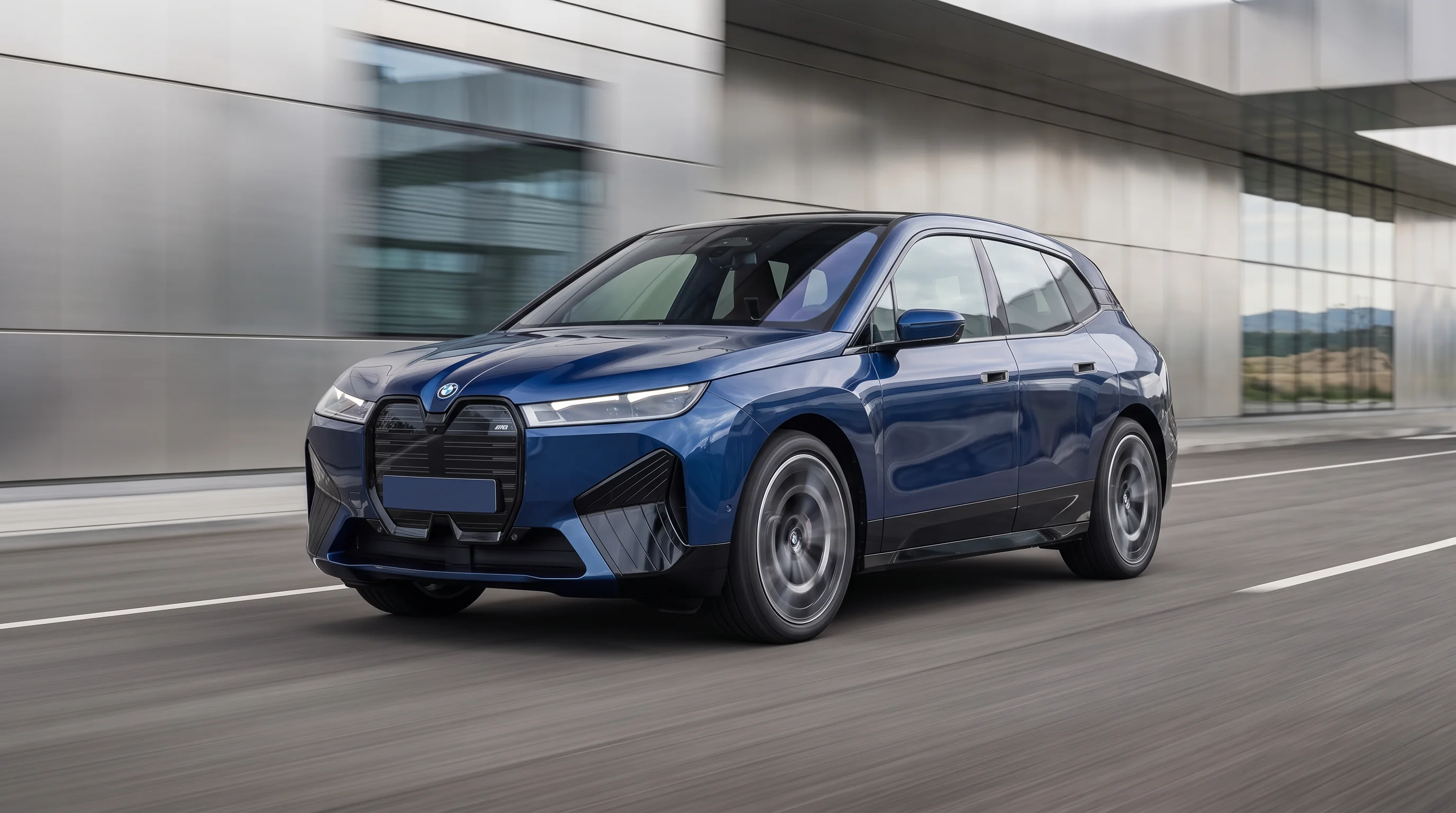
Every time a vehicle slows down, kinetic energy is lost as heat. In a gasoline car, friction brakes press pads against rotors to stop the vehicle. That friction turns motion into waste heat. BMW electrified vehicles work differently. They use Brake Energy Regeneration to capture that kinetic energy and send it back to the high-voltage battery.
Lift off the accelerator or press the brake pedal, and the electric motor reverses its role. It acts as a generator. The result is magnetic resistance that slows the car while producing an electric current.
Models across the BMW electric lineup use this approach, including the BMW i4 Gran Coupe, the BMW iX all-electric SUV, and the BMW iX3. In the BMW iX, BMW pairs it with an Integrated Braking System. BMW packs brake activation, brake booster, and braking control into one compact module. An electric actuator generates the brake pressure. BMW says the result is a pedal feel that stays consistent on wet roads, in hard corners, and at high temperatures.
Does Regenerative Braking Work at a Full Charge?
Shoppers often ask whether the system still works when the battery is full. Not right away, it turns out. A battery cannot accept more current when it is already at capacity. So when a BMW EV is charged to one hundred percent, the system reduces or disables energy recovery to protect the cells, as described in your BMW Owner’s Manual. Most electric vehicles start easing off regen before they reach a true full charge.
During those first miles, the car slows on its friction brakes. Once the state of charge drops enough, the pack can accept current again. The electric motor then re-engages. The handoff is blended, so drivers rarely notice it.
Prefer to shop pre-owned? You can browse our pre-owned BMW inventory to see which plug-in hybrid and all-electric models are currently available.
How Much Energy Does BMW Regenerative Braking Recover?
Regenerative braking recovers a meaningful share of the energy that would otherwise be lost as heat. The benefit is largest in stop-and-go traffic, where you slow down often. No system captures all of it. Hard braking at speed exceeds what the motor can absorb, and the friction brakes handle the rest.
How much power the car generates while slowing depends on its motor layout. BMW’s electric lineup includes single-motor rear-wheel-drive models and dual-motor all-wheel-drive models. Dual-motor cars can harvest energy from both axles. That gives them more recovery potential under heavy braking.
Over time, letting the motor handle routine slowing reduces wear on brake pads and rotors. Our guide to BMW EV maintenance covers what an electric BMW still needs on a regular schedule.
One-Pedal Driving: How B Mode Works
One-pedal driving changes how you interact with the car. Strong regenerative braking manages both speeding up and slowing down. Ease off the accelerator and the vehicle begins to slow at once. The motor switches to generator mode and creates a controlled drag. In ordinary traffic it can slow the car toward a stop without touching the brake pedal.
In a BMW EV, you select this with the B position on the gear selector. BMW calls it recuperation when the accelerator is released, producing a one-pedal feeling. The slowing is predictable and easy to control. Ease off slightly to adjust your speed. Lift off completely for maximum recuperation. The brake pedal still works, and it stays available for sudden stops.
The style also cuts fatigue by removing constant foot movement between pedals.
When to Use One-Pedal Driving
B Position
On accelerator lift-off: Slowing begins at once and is strong enough to handle most everyday deceleration.
Driver adjustability: Fixed maximum recuperation.
Best suited to: City driving with frequent stops.
D Position
On accelerator lift-off: Coasts by default, with regen blended in.
Driver adjustability: Adaptive, low, medium, or high, set in iDrive.
Best suited to: Highway cruising at steady speeds.
Regen is always active to some degree. But maximum recuperation suits some roads better than others. City driving is where one-pedal driving shines. Traffic lights, crosswalks, and constant speed changes give the system plenty to work with. Stop-and-go traffic around Inland Empire shopping centers like Crossings At Corona is an ideal case. The constant slowing feeds energy back to the battery and cuts driver fatigue.
Highway driving is different. At a steady speed on open freeway, coasting generally makes better use of the momentum you already have, since converting it to electricity and back involves losses along the way. Lifting off in a high-regen mode can also slow the car abruptly, which hurts ride comfort. The standard D position lets the car glide and hold its speed with minimal power draw.
Because regen handles most daily slowing, the brake pads see far less friction and heat. The mechanical system still matters for safety, and it still needs upkeep. You can review our current Service & Parts Specials before you book a visit.
Adaptive Recuperation vs Fixed Settings
BMW lets you choose between fixed regen settings and an automated one. In the D position, iDrive lets you set a preferred level: low, medium, or high. Low mimics the coasting feel of a gasoline car. High delivers strong slowing the moment you lift off.
Adaptive recuperation suits drivers who want a hands-off approach. BMW says the intensity of the energy it recovers is matched to the traffic situation using navigation data and driver-assistance sensors. The car reads a slower vehicle ahead, an upcoming intersection, or a lower speed limit, and increases recuperation to match. On open road it activates coasting instead. Adaptive availability can depend on a vehicle’s driver-assistance equipment, so confirm the setup on the model you are considering.
Common Questions About BMW Regenerative Braking
Does cold weather affect BMW’s regenerative braking?
Yes. Research on lithium-ion EV batteries has found that regenerative braking is restricted at low battery temperatures, because a cold pack cannot accept current as quickly. Electric vehicles generally limit maximum regenerative braking force until the battery warms to its optimal operating temperature, so expect softer lift-off deceleration on a cold morning.
Can I completely turn off regenerative braking in a BMW EV?
Not entirely. Regenerative braking is fundamental to the vehicle’s efficiency, and blended braking still engages when you apply the brake pedal. You can select the lowest fixed recuperation setting in the iDrive menu. That lets the vehicle coast much like a gasoline car when you release the accelerator.
How does the integrated braking system prevent pedal vibration?
BMW’s braking module manages brake pressure through an electric actuator. According to BMW, unwanted pedal feedback is eliminated during energy recuperation. This isolates the pedal from the pulsations and changes in resistance that can occur as the system shifts between regenerative and friction braking.
Experience BMW Electric Efficiency in Riverside
Understanding regenerative braking is one thing. Feeling the adaptive system work on the road is another. Our team can walk you through how each electric setup handles energy recovery and help you find the right match. We work with drivers across Riverside, Corona, Ontario, and the wider Inland Empire.
Visit our showroom at 3060 Adams St, Riverside, CA 92504. You can also call our sales team at 888-713-6529 to arrange a test drive.
0 comment(s) so far on BMW Regenerative Braking Explained: How One-Pedal Driving Works