


EV vs. Plug-In Hybrid: Which Is Right for Your Commute?
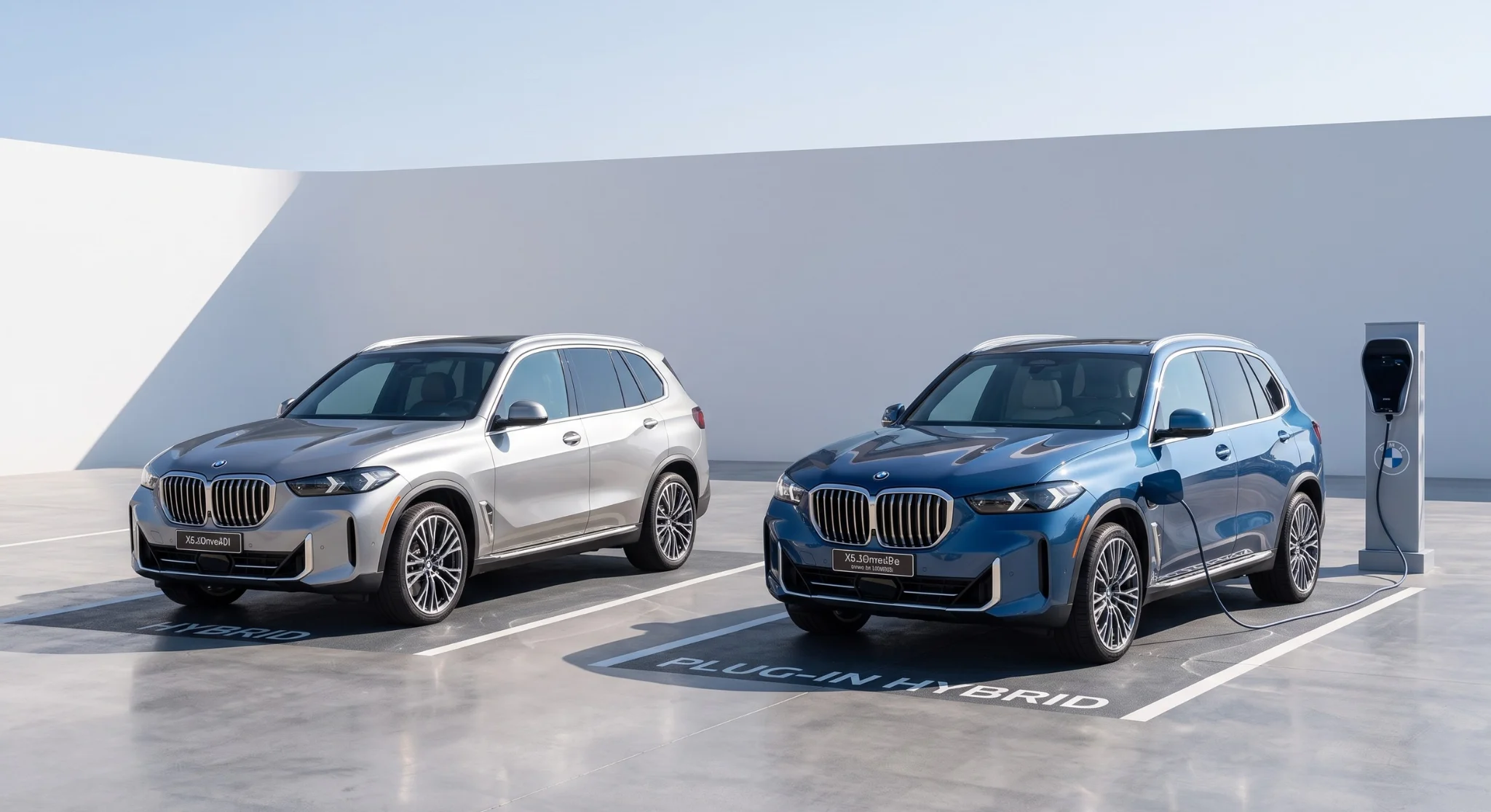
Buying a new vehicle means balancing daily practicality with efficiency. If you want to use less gas, BMW offers two paths: the all-electric vehicle (EV) and the plug-in hybrid (PHEV). The right choice comes down to three things — how far you drive each day, whether you can charge where you park, and how you travel on weekends.
For most commuters, daily driving settles the question. An all-electric model like the BMW i4 gives you a fully gas-free drive with plenty of range. A plug-in hybrid like the BMW X5 xDrive50e splits the difference: an electric motor for short trips, plus a gas engine for longer hauls.
What a Plug-In Hybrid Offers: Electric Range and Home Charging
A plug-in hybrid runs on electricity for a set number of miles. When the battery runs low, it switches to hybrid mode on its own — no stopping, no change in how you drive. That electric range usually covers a normal commute or local errands without using any gas. The BMW X5 xDrive50e, for example, offers up to an EPA-estimated 38 miles of electric driving before the gas engine kicks in.
The X5 xDrive50e is not BMW’s only plug-in hybrid, either. The lineup also includes the 750e xDrive luxury sedan and the high-performance XM, each pairing an electric motor with a gas engine. Here is how BMW’s plug-in hybrids compare at a glance:
| Model | Body Style | Drivetrain | EPA-Estimated Electric Range |
|---|---|---|---|
| BMW X5 xDrive50e | Sports Activity Vehicle | All-wheel drive | Up to 38 mi |
| BMW 750e xDrive | Full-size luxury sedan | All-wheel drive | Up to 34 mi |
| BMW XM Label | Performance SUV | All-wheel drive | Up to 30 mi |
Electric-range figures are the EPA-estimated distances each model can travel on battery power before the gasoline engine engages.
EPA-estimated fuel economy figures are for comparison purposes only. Your actual mileage will vary depending on driving conditions, how you drive and maintain your vehicle, battery age/condition, and other factors.
Charging at home is simple, but the outlet matters. A standard 120-volt household outlet (Level 1) is the slowest option — BMW estimates about 15 to 20+ hours for a full charge, depending on the model. Most PHEV owners top up overnight or add a 240-volt Level 2 charger for a much faster fill. And since PHEV batteries are smaller than those in full EVs, they take less energy to refill. You can learn more about BMW EV charging to see which setup fits your home.
All-Electric Range vs. Plug-In Hybrid Versatility
EVs and plug-in hybrids solve the same problem in different ways. An EV runs entirely on a large battery. It offers much longer electric range, but it needs charging access to work. A PHEV pairs a smaller battery with a gas engine — less electric range, but total fueling flexibility.
The all-electric BMW i4 eDrive40 is a good example. It earns an EPA-estimated range of up to 333 miles on its standard 18-inch wheels, and up to 307 miles on the available 19-inch wheels. That is enough that most drivers rarely think about daily charging. The trade-off is simple: when the battery is low, you need a charger, not a gas station.
The i4 is only BMW’s entry point into all-electric driving. The lineup spans several body styles — the compact i4, the midsize i5, the flagship i7, and the iX Sports Activity Vehicle — so you can match an all-electric BMW to the space and range you need. Here is how they compare at a glance:
| Model | Body Style | Drivetrain | EPA-Estimated Range |
|---|---|---|---|
| BMW i4 | Gran Coupe | Rear-wheel drive or all-wheel drive | Up to 333 mi |
| BMW i5 | Midsize sedan | Rear-wheel drive or all-wheel drive | Up to 310 mi |
| BMW i7 | Full-size luxury sedan | Rear-wheel drive or all-wheel drive | Up to 314 mi |
| BMW iX | Sports Activity Vehicle | All-wheel drive | Up to 364 mi |
Range figures are the highest EPA-estimated ratings for each model; actual range varies by trim, wheel size, and conditions.
EPA-estimated fuel economy figures are for comparison purposes only. Your actual mileage will vary depending on driving conditions, how you drive and maintain your vehicle, battery age/condition, and other factors.
Road Trips and Long-Distance Travel
Long trips are where the two split the most. A plug-in hybrid refuels at any gas station in minutes, so you never have to plan around public chargers — handy for spontaneous road trips. The BMW X5 xDrive50e pairs a 3.0-liter engine with an eight-speed automatic and up to an EPA-estimated 38 miles of electric range, then runs on gas for effectively unlimited range. Properly equipped, it can also tow up to 7,200 pounds — useful for hauling recreational gear or a trailer on the weekend.
Maximum towing and payload capacity figures are based on properly equipped vehicles and vary by configuration. Do not exceed any weight rating. See your owner’s manual and the vehicle’s door-jamb label for specific capacities.
A long trip in an all-electric BMW i4 takes a little more planning, but fast charging makes it easy. On a public DC fast charger, the i4 can go from 10% to 80% in as little as 30 minutes — enough to add real range during a short rest stop.
Purchase Price and Ownership Costs
Upfront price and long-term costs are two different calculations. All-electric vehicles usually cost more to buy than comparable plug-in hybrids, mostly because of their larger batteries. Over time, that gap often shrinks: electricity is typically cheaper than gas, and EVs have fewer moving parts to service.
One more cost factor: the federal clean-vehicle tax credit ended on September 30, 2025. New and used EV and PHEV purchases made today generally do not qualify — unless you took delivery under a binding written contract signed on or before that date. State or local incentives may still apply in your area, so check current programs before you buy.
Frequently Asked Questions
Is an EV or a plug-in hybrid better for a daily commute of 30 to 50 miles?
An EV covers that distance easily and uses no gasoline, as long as you have reliable charging access. A plug-in hybrid like the BMW X5 xDrive50e can handle much of that commute on electricity alone, using its gasoline engine only after the battery is depleted.
Do I need a Level 2 charger?
A standard 120-volt outlet can recharge a plug-in hybrid, though slowly. For an all-electric vehicle, a 240-volt Level 2 home charger is strongly recommended — it refills the battery far faster than a household outlet and makes daily EV ownership much more practical.
Which is cheaper to own for commuting — an EV or a plug-in hybrid?
An EV generally has lower day-to-day commuting costs, since electricity is typically cheaper than gasoline and the vehicle needs less routine maintenance. A plug-in hybrid can make more sense overall if you frequently take long trips and want to avoid relying on public charging.
What happens when a PHEV’s battery runs out of charge?
The vehicle automatically switches to conventional hybrid operation, using its gasoline engine and regenerative braking. You don’t need to stop or charge right away — the gas engine provides driving range comparable to a standard gas-powered car.
What should I compare when shopping for an EV or plug-in hybrid?
Start with your daily round-trip mileage, your home charging setup, and your typical weekend travel. From there, compare cargo and passenger space and whether you need all-wheel drive for your regular routes.
Find Your Next Electrified BMW
Whether you prefer the fully gas-free drive of an all-electric i4 or the dual-power flexibility of an X5 xDrive50e plug-in hybrid, the right choice comes down to how you drive every day. Match the technology to your commute, your charging access, and your weekend plans. Either path can make daily driving easier and more efficient.
Disclosures
EPA-estimated fuel economy figures are for comparison purposes only. Your actual mileage will vary depending on driving conditions, how you drive and maintain your vehicle, battery age/condition, and other factors.
Maximum towing and payload capacity figures are based on properly equipped vehicles and vary by configuration. Do not exceed any weight rating. See your owner’s manual and the vehicle’s door-jamb label for specific capacities.
Driver-assist and safety systems are supplemental aids and are not a substitute for safe, attentive driving. Their effectiveness depends on weather, road, and traffic conditions and other factors. Always obey traffic laws and stay attentive to the road. See your owner’s manual for system details and limitations.
0 comment(s) so far on EV vs. Plug-In Hybrid: Which Is Right for Your Commute?